

Emergency Fund: How Much You Need and Where to Keep It
An Emergency Fund is the money you keep for life’s bad surprises. A sudden car breakdown. A medical bill you did not plan for. A layoff that cuts income for weeks. This fund exists for one job: keep your life steady when something hits out of nowhere.
Many people confuse emergency savings with general savings. General savings can be for a trip, a phone upgrade, a wedding, or a planned move. An Emergency Fund is different. It is your financial safety net. It protects rent, food, transport, and minimum debt payments during a rough patch. It gives you breathing room so you do not need to rely on expensive debt at the worst time.
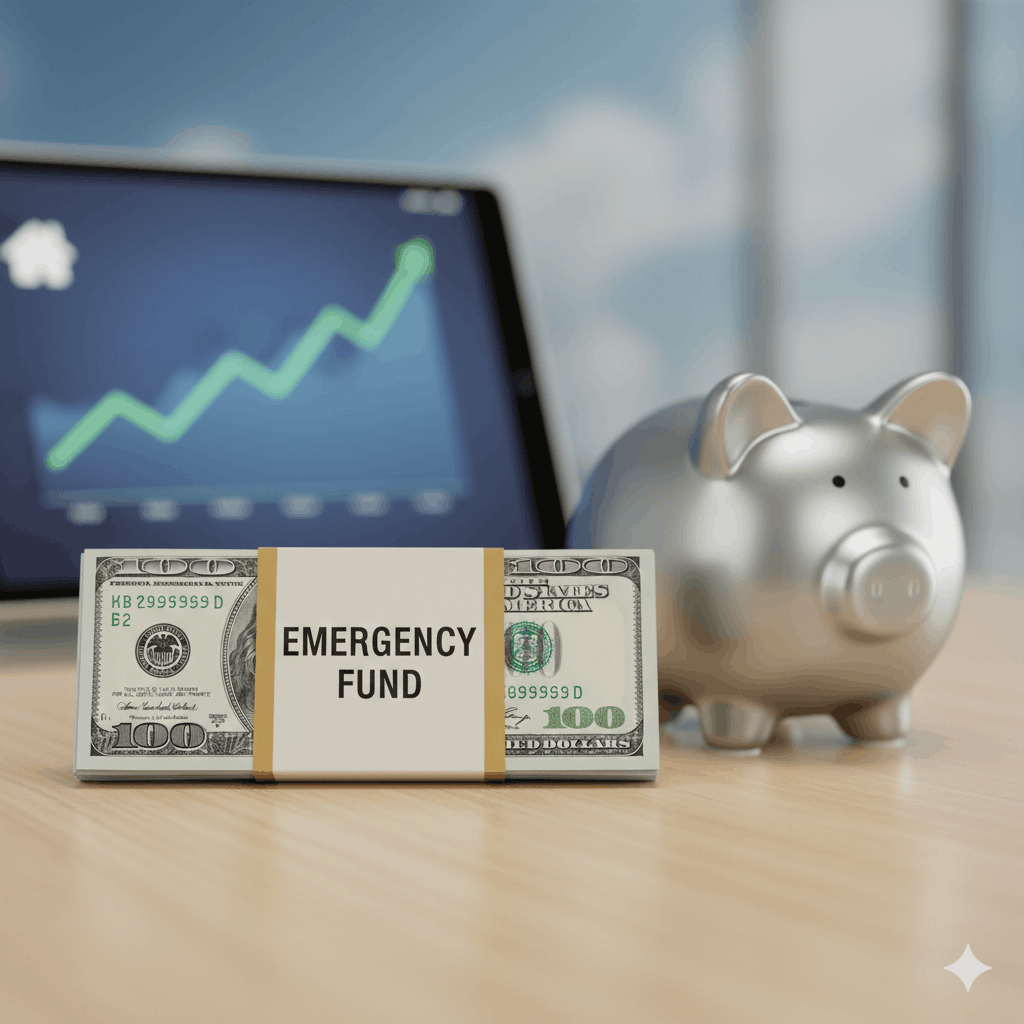
This guide answers two questions in a clear way: how much to save for emergencies, and where to keep emergency fund money so it stays safe and available fast. You will learn an emergency fund calculation you can do today, how to set emergency fund goals, how to build an emergency fund in stages, and how to separate emergency fund vs savings so you never accidentally spend it.
What an Emergency Fund really is
An Emergency Fund is a dedicated emergency cash reserve set aside for urgent, unplanned costs or a sudden drop in income. You may hear different names:
- rainy day fund
- unexpected expenses fund
- cash reserve fund
- contingency fund
- emergency cash reserve
- emergency money
The label matters less than the purpose. The goal is financial stability during a shock.
Emergency fund vs savings
Emergency fund vs savings is one of the most common points of confusion.
Savings can cover planned purchases. Savings can be flexible. Some savings can be invested for long timelines.
A financial emergency fund stays liquid. It stays separate. It stays boring by design. It exists for financial preparedness, not for lifestyle upgrades.
Short-term savings vs emergency savings
Short-term savings can cover predictable costs within the next year. A car insurance renewal. Gifts. A holiday trip. That money still matters, yet it is not a replacement for an Emergency Fund. A true emergency fund sits behind those plans and covers problems that do not fit a calendar.
What counts as an emergency
An Emergency Fund should cover real emergencies, not normal monthly budget stress. Use this simple filter:
An emergency is unexpected, urgent, and creates a real risk to your household.
Common emergencies your fund should handle
Job loss savings and income replacement savings
A job loss can hit fast. Job loss savings exist to protect your must-pay bills during the gap. This is income replacement savings. It is a main reason people build a personal emergency fund.
Medical emergency savings
Medical costs can show up without warning. Medical emergency savings can cover deductibles, urgent care, prescriptions, lab bills, or travel for treatment.
Car repair fund
A car repair fund can be its own category for predictable maintenance. Still, big breakdowns happen. An emergency cash reserve can cover towing, urgent repair work, or temporary transport.
Home repair emergency fund
Home repairs can be expensive and urgent. A leaking pipe, electrical issues, or a broken appliance that affects daily life can qualify.
Unexpected expenses fund items
Emergency travel for family, sudden legal fees, a stolen phone needed for work, or a major pet emergency can fit this category.
What does not belong in an Emergency Fund
An Emergency Fund is not meant for:
- planned annual bills you forgot to budget
- regular overspending in dining or shopping
- upgrades you want, not need
- travel that can wait
Planned costs belong in short-term savings or a sinking-fund style category. That separation keeps your emergency fund amount intact.
Emergency fund importance: why this one category changes everything
An Emergency Fund reduces financial stress in a way most other habits do not. It gives you options.
With a cash buffer, you can:
- pay a bill without panic
- avoid high-cost debt
- take time to choose the right solution
- protect your household budget during a rough month
Many surveys in the US show that a meaningful share of adults would struggle with a small surprise expense without borrowing or selling something. That gap is a reminder that financial preparedness is not automatic. It is built.
Emergency fund amount: how much you need
The most practical emergency fund amount is based on your monthly must-pay expenses. Many people aim for 3 to 6 months expenses as a target. That range fits a wide mix of households. Your best number depends on risk, income stability, dependents, and the size of your fixed bills.
A good target is not just a number you like. It is the number that covers your life.
The emergency fund calculation (step by step)
This emergency fund calculation uses income minus spending math, not feelings.
Step 1: List your must-pay monthly expenses
Use this list as a starting point:
- rent or mortgage
- utilities you must keep (electric, water, basic internet)
- groceries and household supplies
- transport needed for work and life
- insurance premiums
- minimum debt payments
- medical basics (prescriptions, necessary care)
Do not include optional lifestyle spending in this step. This is not your full budget. It is your survival budget.
Step 2: Total that monthly number
This total is your monthly “keep life running” cost.
Example:
- Housing and utilities: 1,200
- Groceries and supplies: 350
- Transport: 180
- Insurance: 120
- Minimum debt payments: 150
- Medical basics: 50
Monthly must-pay total: 2,050
Step 3: Multiply by your month target
Now apply 3 to 6 months expenses.
- 3 months: 2,050 × 3 = 6,150
- 6 months: 2,050 × 6 = 12,300
That range gives a clear emergency fund goal.
Step 4: Adjust for your real risk
Some people should lean toward the higher end of the range. Some can start with the lower end and build.
Choosing your target: 3 months, 6 months, or more
A one-size rule does not fit every household. Use these factors to decide.
When 3 months expenses can be a solid starting point
- two incomes with steady pay
- lower fixed bills
- strong job stability
- strong ability to cut discretionary expenses fast
- access to reliable support in a true crisis
A 3-month fund still matters. It can cover most common “shock” events.
When 6 months expenses is the safer target
- single-income household
- freelance, commission, seasonal work, or variable income
- higher housing costs that are hard to reduce
- dependents or caregiving responsibilities
- higher medical risk or high out-of-pocket exposure
- limited room to cut spending during a crisis
A larger emergency cash reserve protects financial stability during long gaps.
When more than 6 months can make sense
Some households choose a bigger cash reserve fund:
- self-employed with income swings
- specialized work where job search takes longer
- household with a single earner and several dependents
- high fixed costs with limited flexibility
That said, the “right” number still needs to be realistic. A perfect target that feels unreachable often leads to quitting. A staged plan solves that.
A staged approach that makes emergency savings easier
A strong emergency fund strategy does not start with “save six months.” It starts with a small cash buffer, then grows.
Stage 1: Starter emergency money
Goal: 250 to 1,000 (choose a number that matches your life)
This starter fund covers small surprises like a minor car repair fund expense, urgent medicine, or a short-term bill gap.
Stage 2: One month of must-pay expenses
Goal: one full month of your must-pay total
This level creates real breathing room. It can cover a major unexpected expenses fund hit without debt.
Stage 3: Three months of must-pay expenses
Goal: 3 months expenses
At this stage, job loss savings starts to feel real. Many households notice less money stress here.
Stage 4: Six months (or your chosen target)
Goal: 6 months expenses, or the target your risk level calls for
This stage supports income replacement savings for longer gaps.
A staged method keeps progress visible and keeps motivation steady.
Budgeting for emergencies: how to fund the emergency fund monthly
Emergency savings grow through routine. Big leaps help, yet consistency builds the foundation.
Add a dedicated line in your budget
Treat your emergency fund goals like a bill.
Set a monthly amount that fits your income:
- small start: 20, 50, or 100 per month
- medium start: 150 to 300 per month
- aggressive start: 500+ per month
The amount matters less than the habit at the start.
Use a “found money” rule
Saving for unexpected costs gets easier when you choose a rule for extra money:
- tax refunds
- bonuses
- cashback rewards
- gifts
- side income
Pick a percentage of these amounts that goes straight into household emergency savings until you hit your next stage goal.
Remove one recurring leak
Look for one recurring cost that you can cut for 90 days:
- unused subscriptions
- frequent delivery fees
- impulse shopping habits
Redirect that amount to your emergency savings account.
Pair it with expense tracking
Expense tracking helps you find the categories that drift. That drift often funds your Emergency Fund without changing your whole life.
Where to keep emergency fund money
Where to keep emergency fund savings matters as much as how much you save. The job of this money is speed and safety, not high growth.
An Emergency Fund should stay in liquid savings. Think liquid assets that you can access within a day or two without penalties.
What “liquid” means in real life
Liquid savings means:
- fast access
- stable value
- low friction to withdraw
Emergency money is not meant to ride market swings. It is meant to be ready.
A simple two-layer setup
A two-layer approach works for many households:
Layer 1: Small emergency cash reserve for immediate access
This can be a small cash buffer in checking or a separate sub-account. It covers same-day needs.
Common size: one to two weeks of must-pay spending.
Layer 2: Main emergency fund in a separate account
This holds the rest of your target fund. It stays separate from daily spending.
This separation supports spending discipline without needing willpower.
Best places for a financial emergency fund
The best place depends on your priorities: speed, safety, and low friction. Many people use an emergency savings account at a bank, often a high-yield savings account.
High-yield savings account
A high-yield savings account often makes sense for emergency savings:
- easy transfers
- stable value
- separate from spending
- interest earnings that can offset inflation a bit
Look for:
- simple withdrawals
- no monthly fees
- reliable transfer times
Regular savings account
A regular savings account can still work, especially when access is smooth and fees are low. The interest rate may be lower. The main goal remains liquid savings with safety.
Money market deposit account
Some people use money market accounts for emergency cash reserve storage. The key check is access rules, withdrawal limits, and fees.
Keeping part in a very safe short-term instrument
Some households keep a portion of emergency money in short-term, low-volatility products. This only makes sense if access stays fast and penalties stay minimal. The “first layer” should stay fully liquid.
What “no-risk savings” should mean in practice
No-risk savings is a common phrase. In real life, it should mean:
- stable principal
- access without delay
- low chance of loss
- low chance of penalties
A financial safety net should not depend on perfect timing.
Emergency fund vs savings: separating accounts to stop accidental spending
Mixing emergency savings with daily money is one of the fastest ways to drain it. A separate emergency savings account helps.
Simple rules that work
- Keep the personal emergency fund in a separate bank account
- Turn off debit card access to that account if possible
- Name the account “Emergency Fund” or “Rainy Day Fund”
- Use automatic transfers on payday
This setup improves financial preparedness without extra effort.
How to use your Emergency Fund without guilt
A financial emergency fund is not a trophy. It is a tool. Use it when the situation fits the purpose.
Clear “use rules” for emergency fund strategy
Use the fund for:
- job loss savings needs when income drops
- medical emergency savings bills
- urgent home repair emergency fund events
- urgent car repair fund events
- essential travel tied to family emergencies
- urgent safety issues
Avoid using it for:
- lifestyle upgrades
- routine overspending
- predictable annual expenses you can plan for next year
If you do use it for a real emergency, the next step is rebuilding.
Rebuilding after you use it
A common mistake is using the fund and never refilling it. Treat refill as part of your plan.
The refill plan
- return to Stage 1 first if the fund was heavily used
- rebuild the starter cash buffer fast
- resume monthly contributions until the emergency fund amount returns to target
A refill plan protects financial stability for the next shock.
Real examples: what “3 to 6 months expenses” can look like
Numbers make this real. These examples use must-pay monthly expenses, not full lifestyle budgets.
Example 1: Single person, steady income
Must-pay monthly expenses:
- housing and utilities: 1,100
- groceries and supplies: 300
- transport: 160
- insurance: 100
- minimum debt payments: 140
Monthly total: 1,800
Emergency fund amount targets:
- 3 months expenses: 5,400
- 6 months expenses: 10,800
A reasonable staged plan:
- starter cash buffer: 500
- one month: 1,800
- three months: 5,400
- six months: 10,800
Example 2: Household emergency savings with kids
Must-pay monthly expenses:
- housing and utilities: 2,200
- groceries and supplies: 750
- transport: 350
- insurance: 250
- minimum debt payments: 300
- medical basics: 100
Monthly total: 3,950
Emergency fund amount targets:
- 3 months: 11,850
- 6 months: 23,700
This household may prioritize a higher target if income depends on one earner or job stability is uncertain.
Emergency fund tips that make the habit stick
These emergency fund tips are practical, not complicated.
Make the first goal small and fast
A small win builds momentum. A starter emergency cash reserve reduces stress quickly.
Automate transfers
Automation reduces reliance on mood. Set the transfer on payday.
Keep your fund separate from spending
A separate emergency savings account reduces temptation.
Track one category that tends to drift
Dining, shopping, or delivery fees often drift. Tightening one category can fund emergency savings monthly.
Treat the fund like a household priority
Household emergency savings protects everyone in the home. That mindset supports long-term consistency.
Common mistakes that slow progress
Saving too aggressively, then quitting
A smaller monthly contribution that lasts beats a large amount that stops after two months.
Keeping the fund somewhere hard to access
If the money is locked away, the plan fails during a real emergency.
Investing the core emergency fund
Emergency money is not meant to face volatility. Keep the main fund in liquid assets.
Forgetting your minimum debt payments
Emergency fund calculation should include minimum payments. Missing them during a crisis can create bigger problems.
Closing section
An Emergency Fund is one of the simplest tools for financial stability. It is emergency savings with a clear purpose: cover emergencies without panic. A rainy day fund can handle smaller surprises. A full financial emergency fund can cover job loss savings needs, medical emergency savings costs, a car repair fund emergency, or a home repair emergency fund event.
Start with a starter cash buffer, build toward one month of must-pay expenses, then move toward 3 to 6 months expenses based on your risk level. Keep the money in liquid savings, often through an emergency savings account such as a high-yield savings account. Keep it separate from everyday spending. That separation protects your financial safety net and strengthens financial preparedness over time.


