
If you searched gomyfinance.com create budget, you probably want one clear thing: a budget that works in real life. Not a spreadsheet that looks nice for two days. Not rules that collapse the first time an unexpected bill shows up. A budget that stays useful through normal weeks, busy days, and uneven spending.
This guide is built as a complete create a budget GoMyFinance hub. It covers GoMyFinance budgeting from the first setup to the weekly routine that keeps it steady. You’ll see how income tracking, bill tracking, and an expense tracker fit together. You’ll learn how to shape a GoMyFinance monthly budget, handle cash flow management, build a savings plan, and include debt management without feeling stuck.
You’ll also see how a GoMyFinance budget tool, GoMyFinance budget planner, and GoMyFinance finance dashboard can help you stay consistent through online budgeting. The goal is financial control that feels calm, not exhausting.
What “create budget” means on GoMyFinance
A budget is a plan for your money before it leaves your hands. That plan should match your paydays, bill dates, and household needs. GoMyFinance personal finance content works best when it keeps budgeting practical:
- Plan the month around your real income.
- Set category limits that match your normal life.
- Track spending in a way you can keep doing.
- Adjust the plan without starting over.
That’s GoMyFinance money management in one line: know where money is going, decide where it should go next, then keep the system moving.
Who this budgeting guide is for
This page helps three kinds of readers:
People with no budget who want a first GoMyFinance household budget that feels doable.
People with a budget that keeps failing who want smart budgeting that holds up.
People who already budget yet want clearer spending analysis and a cleaner financial overview.
No matter where you start, the same foundation applies: know income, map bills, set categories, then track and adjust.
The numbers that make budgeting worth doing
Many households feel like they “should” budget, yet they never start. One reason is that budgeting feels like extra work. The other reason is that the problems budgeting solves can feel normal, even when they drain money.
A commonly cited U.S. household survey found many adults would struggle to cover a $400 surprise expense using cash or its equivalent. That is not about poor choices. That is about thin buffers. A budget helps build a buffer.
Another widely reported pattern is that many people say they have a budget, yet a much smaller share says they stick to it consistently. The gap usually comes from two issues: category limits that do not match real spending, and cash flow timing that causes late fees or rushed decisions.
GoMyFinance financial planning should focus on solving those two issues first.
Before you start: set the goal for your budget
A budget needs a purpose. Pick one for the next 30 days:
- Stop overdrafts and late fees
- Build a starter savings plan
- Start debt management with steady progress
- Control spending in one category that keeps rising
- Create room for financial goals without guesswork
A purpose keeps the budget grounded. It turns budgeting into a tool, not a punishment.
Step 1: Set up income tracking that reflects real pay
Income tracking is the first job in GoMyFinance budgeting. Many budgets fail because income is guessed.
List your take-home income
Use net income, not gross. If your income is stable, list the monthly total.
If income changes each month, use a cautious baseline:
- Look at the last three months.
- Pick the lowest normal month.
- Build the budget from that number.
- Treat extra income as bonus money for savings plan or debt management.
This approach keeps the GoMyFinance monthly budget stable even when income moves.
Separate regular income from irregular income
Regular income is paycheck, consistent freelance work, steady side income.
Irregular income is one-time gigs, seasonal shifts, bonuses.
A budget built on irregular income turns into stress. A budget built on regular income stays calm.
Step 2: Bill tracking that stops surprise timing problems
Bill tracking is where many budgets finally “click.” People often know what they owe, yet the timing causes trouble.
Build a bill calendar
List every bill with:
- due date
- usual amount
- payment method
- whether it can be moved to a new due date
This is the heart of cash flow management.
Map bills to paydays
Put paydays on the same calendar. Then mark which bills fall between paydays.
If too many bills cluster in one window, that’s a cash flow issue, not a discipline issue.
A strong GoMyFinance budget planner view should show this clearly.
A fast fee-reduction move
Late fees and overdraft fees are hidden budget killers. Many households can reduce monthly cost just by fixing timing.
If a due date can be moved, move it closer to the days right after payday. This one change can reduce stress quickly.
Step 3: Build your GoMyFinance monthly budget categories
Now build category limits. Keep the category list short. Too many categories turns budgeting into a full-time job.
A clean structure for a GoMyFinance household budget:
Home and bills
Rent or mortgage, utilities, phone, internet, insurance.
Food and transport
Groceries, fuel, transit, work meals.
Savings plan and debt management
Emergency fund, sinking funds, credit cards, loans.
Life spending
Personal spending, family needs, small fun money, gifts.
A GoMyFinance financial overview should make these buckets visible at a glance.
Step 4: Choose a budgeting method you can repeat
Different people stick to different methods. The best method is the one you will keep using after the first week.
The bucket method
You set monthly totals for each bucket and stay inside them.
This fits online budgeting and works well with a GoMyFinance finance dashboard.
The weekly limit method
You set a weekly limit for flexible spending. Bills and saving stay separate.
This works well for people who spend in bursts and want daily control without tracking every detail.
The payday plan method
You plan the budget in segments between paydays. Each segment has a mini-budget.
This is a strong cash flow management method, especially with bill clusters.
Create a budget GoMyFinance pages should present these options in plain language, then help the reader pick one.
Step 5: Set limits that match real life
Budgets fail when category limits are fantasy. The fix is grounded limits.
Start with last month
Look at last month’s totals. Use those numbers as a baseline. Then adjust one category at a time.
If you cut five categories at once, the budget becomes fragile.
Pick one category to tighten first
Common first targets:
- takeout and delivery
- shopping
- subscriptions
- impulse spending during busy days
Tighten one category, keep the rest realistic, then revisit after two weeks.
That’s smart budgeting: one change that sticks beats ten changes that collapse.
Step 6: Add a savings plan that fits inside the budget
A savings plan inside the budget stops saving from becoming “whatever is left.”
Start with a starter buffer
A starter buffer reduces panic transfers, overdrafts, and sudden credit card use.
Pick a small first target you can reach in weeks, not months.
Add sinking funds for known expenses
Sinking funds are mini-savings goals for expenses that return every year:
- car maintenance
- annual insurance premiums
- school costs
- holiday spending
- medical copays
Sinking funds reduce surprise spending. They improve cash flow management.
Keep savings automatic
Set the transfer right after payday. Automation is the easiest way to keep a savings plan going.
A GoMyFinance budget tool should allow this plan to be visible inside the monthly budget.
Step 7: Debt management inside a budget without burnout
Debt management is part of many household budgets. The goal is progress with stability.
Keep minimum payments locked in
Minimum payments belong in the bills bucket. Treat them like rent.
Pick one payoff focus
Use one of two approaches:
- Small-balance focus for quick wins
- High-interest focus for lower total interest paid
Either can work. The plan should match your habits.
Keep new debt from forming
Debt payoff fails when spending keeps creating new balances. The budget must include a realistic life spending amount, even if it is modest.
A GoMyFinance money management approach should acknowledge real spending needs instead of pretending they disappear.
Step 8: Use an expense tracker without tracking everything
Expense tracker systems fail when they demand too much attention. Use a method that fits your life.
The weekly review method
Once per week:
- open the GoMyFinance finance dashboard
- check spending analysis by category
- check bills due before the next payday
- adjust one category if it is running hot
Ten minutes is enough.
The top-category tracking method
Track only your largest spending categories. Many households find that four to six categories tell the full story.
The “alerts only” method
Some people do best with notifications when a category crosses a limit. GoMyFinance budgeting features can support that by showing a progress bar on the finance dashboard.
Expense tracking methods should support the budget, not replace it.
Step 9: Spending analysis that leads to a decision
Spending analysis is only useful if it creates one next action.
A strong GoMyFinance spending analysis view should answer:
- Which category is rising this month?
- Is the rise timing-related or habit-related?
- What change would lower it next week?
Examples of useful actions:
- Adjust grocery plan for the next week
- Add one mid-month bill payment to prevent overdraft
- Move a due date
- Add a sinking fund line for a repeating surprise
That’s financial control: quick decisions from clear data.
Step 10: Cash flow management that keeps the month smooth
Cash flow management is the skill that turns budgeting from frustrating to steady.
Create a buffer in checking
A small buffer protects you from timing issues and minor surprises. Keep it separate from savings. Treat it as “do not touch” money.
Pay bills in a planned rhythm
Some households pay bills weekly. Some pay twice per month. Some pay on payday.
Pick one rhythm and keep it consistent.
Avoid the “bill pile” effect
Bills do not feel heavy when they leave your account in a predictable pattern. They feel heavy when they cluster unexpectedly.
Bill tracking and cash flow planning solve this.
Household budget planning for families and shared money
A GoMyFinance household budget needs fewer arguments, not more.
Set shared rules, not shared micromanagement
Shared rules can be short:
- a weekly flexible spending limit
- a cap for any single purchase that needs a quick check-in
- one shared savings target for the month
Create a personal spending lane
Each adult should have a small personal spending lane. The size depends on income. The lane reduces friction. It keeps the budget stable.
Hold one short budget meeting per week
Ten minutes. Look at the finance dashboard. Review spending analysis. Confirm bills. Done.
This keeps online budgeting from becoming a constant conversation.
How the GoMyFinance budget tool and planner can support your routine
A GoMyFinance budget tool should simplify the budget work, not add steps. A GoMyFinance budget calculator should help you test scenarios without rebuilding the whole plan.
What a budget tool should show on the dashboard
A GoMyFinance finance dashboard becomes more useful when it shows:
- income tracking totals for the month
- bills due before next payday
- category progress bars
- savings plan progress
- debt management progress
- a clear financial overview in one screen
This is where GoMyFinance budgeting app style layout matters. People return to tools that feel quick.
What a budget planner should help you do
A GoMyFinance budget planner should help plan the month before it begins:
- set category limits
- map bills to paydays
- schedule saving transfers
- plan for irregular expenses through sinking funds
This keeps the budget steady.
Budget calculator use cases
A GoMyFinance budget calculator can answer practical questions:
- What happens if I add $50 per month to debt management?
- How much can I save if I lower one category by 10%?
- How fast can I build a buffer with a small weekly transfer?
These answers make the budget feel real.
Online budgeting habits that keep the plan alive
Online budgeting works best with a short routine:
- One setup day each month
- One weekly check-in
- One reset when life changes
The monthly setup day
Pick one day near the end of the month.
- Update income for the next month
- Confirm bills and due dates
- Set category limits
- Set savings plan transfers
- Choose one focus goal
The weekly check-in
Use your expense tracker and dashboard.
- Review category totals
- Look at the next set of bills
- Make one adjustment
The life-change reset
A job change, rent change, new child, or new debt changes the budget.
Reset the plan, keep the structure, then move forward.
Common budgeting problems and fixes
“My budget looks good, yet I still run out of money”
This is often timing, not math.
Fix:
- Review cash flow windows between paydays
- Move due dates if possible
- Add a checking buffer
- Pay some bills earlier
“I can’t stop overspending in one category”
This is usually a missing boundary.
Fix:
- Set a weekly limit for that category
- Use a separate spending card or separate account for that category
- Add a short pause rule for non-urgent buys
“I keep forgetting bills”
This is a bill tracking problem.
Fix:
- Put all due dates in one calendar
- Set reminders three days before
- Use autopay for minimums where it fits
“My income changes month to month”
Use the baseline method:
- Build the budget on a cautious income number
- Treat extra income as savings plan fuel and debt management fuel
- Keep category limits stable, then adjust after two weeks if needed
A copy-and-use budget template for GoMyFinance monthly budgeting
Use this as a starting template inside your GoMyFinance online budgeting setup.
Home and bills
Rent or mortgage: ____
Utilities: ____
Phone and internet: ____
Insurance: ____
Subscriptions: ____
Food and transport
Groceries: ____
Fuel or transit: ____
Work meals: ____
Savings plan and debt management
Emergency fund: ____
Sinking fund: ____
Credit card payoff: ____
Loan payoff: ____
Life spending
Personal spending: ____
Family needs: ____
Gifts: ____
This is not meant to be perfect on day one. It is meant to get you moving.
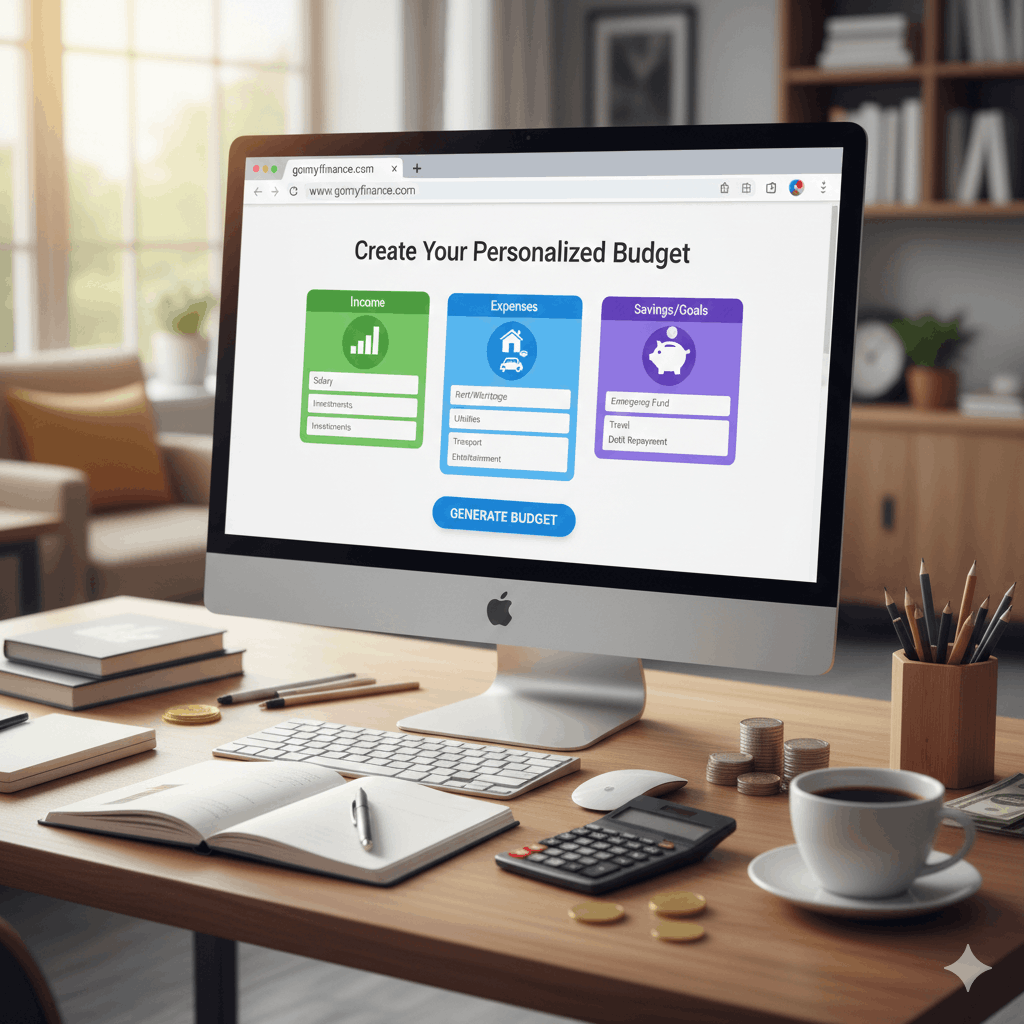
Wrap-up
A budget that works is built from real income tracking, clear bill tracking, and category limits that match real life. That structure becomes steady once an expense tracker and short spending analysis check-in are in place. Add cash flow management so bills stop colliding with low-balance days. Layer in a savings plan for safety and debt management for progress. Over time, the GoMyFinance budget tool, GoMyFinance budget planner, and GoMyFinance finance dashboard become the place where your financial overview stays clear and your financial goals stay visible. That is financial control without the daily stress.